Determined to Crush It

What a year! Phew! We started out mobilized, determined to resist the Trump agenda, to persist like pit bulls on a meat wagon. We marched worldwide on January 21, 2017, to assert the rights of women to equality and dignity. I marched proudly in New York City.

Habari Gani?

Kujichagulia (self-determination) to be responsible for the community and to speak for oneself.

Let’s celebrate Kwanzaa by being determined to recognize the needs of our communities and by being willing to stand for justice and dignity and against racism.  For more information about Kwanzaa, go toWhat is Kwanzaa

free-vector-kwanzaa-icon_101867_Kwanzaa_Icon

On January 21, 2018, thousands will come together in Las Vegas, Nevada, to celebrate the one-year anniversary of the Women’s March.  Find a march in your city:  https://www.womensmarch.com/power-to-the-polls/

In the spirit of Kwanzaa, the Harvest Festival we ask:

When will there be a harvest for the world?

[lyrics by Ronald Isley]
All babies together, everyone a seed
Half of us are satisfied, half of us in need
Love’s bountiful in us, tarnished by our greed
When will there be a harvest for the world

A nation planted, so concerned with gain
As the seasons come and go, greater grows the pain
And far too many feelin’ the strain
When will there be a harvest for the world

Gather every man, gather every woman
Celebrate your lives, give thanks for your children
Gather everyone, gather all together
Overlooking none, hopin’ life gets better for the world

Dress me up for battle, when all I want is peace
Those of us who pay the price, come home with the least
Nation after nation, turning into beast
When will there be a harvest for the world?
When will there be?
I wanna know now, now
When will there be, a harvest?
When will there be?
When will there be?
Everybody, talking bout the children
When will there be, a harvest?
When will there be?

for more information about Breena Clarke’s books, go to www.BreenaClarke.com


Sugar Crush Saga

candy-chalet gingerbread house
     Christmas is over. The Sugar Plum Fairy has pirouetted into the sunset for another year. Candy canes can come down from the mantle and fruitcakes, pies, puddings, frosted donuts, chocolate-covered everything and cookies, peanut butter cookies with a dollop of jelly in the center are officially over. Valentine’s Day is just around the corner. Yikes.
     Like my maternal and paternal grandmothers, I’ve got sugar. I’ve got what my grandmothers called “sugar diabetes.” And, despite taking the sophisticated medications now used to treat the condition, until a year ago I mostly ate anything that appealed to me. Cookies. Peanut butter and jelly cookies. I made dozens of them last Christmas. My medication mitigated my transgressions of diet just enough to keep me on the edge of management of the condition. But last year’s dozens of pb&j cookies and the Entenmann’s donuts and the ice cream and that pretty bowl of red and green M&Ms caused a sugar shock for my husband that threatened his eyesight. We had to confront our sugar crush.
      For a diabetic, Christmas isn’t easy in the grocery stores. I’m comfortable with my diet. I’ve had great results and I feel good. But it is a principle of food retailers that candy is shelved, displayed alongside the lines to the checkout. That way, all shoppers have the opportunity to linger and consider purchasing the most addictive, unhealthy and generally more expensive offerings they sell. After Christmas I tell myself, they’ll take some of this temptation away until Valentine’s Day. We’re in this seasonal sugar celebration from Halloween, to Christmas and Valentine’s Day and Easter, then Mother’s Day. What is a diabetic to do?

Celebrate Kwanzaa, a harvest festival created to acknowledge African culture in the Americas.    IMG_1105
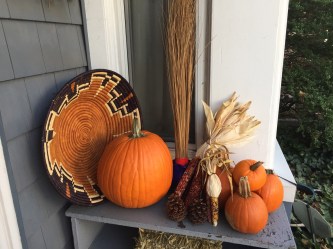
December 26 – January 1 
There are seven principles of Kwanzaa called Nguzo Saba and each day is dedicated to one of these principles:

Umoja (unity) to maintain unity in the family and community

Kujichagulia (self-determination) to be responsible for the community and to speak for oneself.

Ujima (collective work and responsibility) to build and maintain a community.

Ujamaa (cooperative economics) to help build and maintain our own businesses.

Nia (purpose) to build and develop goals to benefit the people of the community.

Kuumba (creativity) to make the community more beautiful and beneficial for the future generation.

Imani (faith) to believe in our people, parents, teachers, and leaders.

more: What is Kwanzaa    

No need to stuff yourself with sugar. Consider this the time to explore lower sugar, lower carb, higher fiber, higher protein options for your diet.

Kwanzaa greeting: Habari Gani?

Today’s response: UMOJA, Unity.


The First Principle of Kwanza is Umoja, Unity. The past year of Trump trauma has tested the idea of Unity in our nation. Paradoxically I’ve made community with a wider array of people because of the traumatic events of the Trump presidency. I’ve talked a lot about health and fitness, “sugar” diabetes and communities of color. And I’ve reflected that the people of the African Diaspora are particularly, uniquely, and peculiarly connected to sugar and the trade in sugar and slaves and rum and the wealth it created.
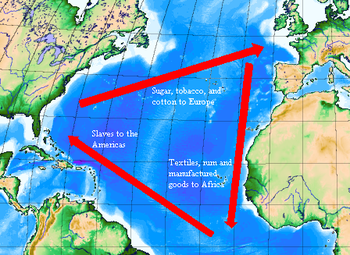
Traingle trade
The Triangle trade in American History is a pattern of colonial commerce in which people were purchased on the African Gold Coast with New England rum, then the enslaved were traded in the West Indies for SUGAR or molasses, which was brought back to New England to be manufactured into rum.  for a fuller understanding of the Atlantic Slave Trade: http://abolition.e2bn.org/slavery_43.html
Compared to the general population, African Americans are disproportionately affected by diabetes:
  • 13.2% of all African Americans aged 20 years or older have diagnosed diabetes.
  • African Americans are 1.7 times more likely to have diabetes as non-Hispanic whites.
     Over-consumption of sugar has been implicated in the occurrence of obesity, diabetes, cardiovascular disease, dementia, and tooth decay. And diabetes is associated with an increased risk for a number of serious, sometimes life-threatening complications, and CERTAIN POPULATIONS ARE DISPROPORTIONATELY AFFECTED.  And because good diabetes diagnosis and management can be expensive for uninsured or under-insured people, many are unaware they have diabetes until they develop one of its complications. African-Americans are significantly more likely to suffer from diabetes-related blindness, kidney disease, and amputations. from American Diabetes Association website.Living With Diabetes
So this is about how to celebrate Kwanzaa in 2017.
free-vector-kwanzaa-icon_101867_Kwanzaa_Icon
Light a candle tonight and reflect on UNITY. UMOJA Let’s think about the historical impact of sugar . . . or NOT. Let’s celebrate our triumph over that moment and resolve to push back against King Sugar. Make this cranberry cake/pie that I adapted for my diabetes-friendly diet. It satisfies my sweet craving and gives me the wonderful benefits of cranberries cranberry 411  and the usefulness and flavor of walnuts and some whole grain.
cranberries
Cranberry Pie/Cake
3/4 cup of whole wheat flour & 1/4 of all-purpose white flour & 1 teaspoon of baking soda
3/4 cup of Truvia baking blend – a combination of the stevia leaf and a small percentage of granulated sugar.
 A dash of salt
2 cups of fresh cranberries (frozen is a-okay just not canned/jellied)
1/2 cup chopped walnuts – a healthy fat
1/2 cup of canola oil or oil of your choice
2 eggs
1 teaspoon of vanilla flavoring (optional – can use almond)
Preheat oven to 350degrees. Spray a 9-inch pie pan with a cooking spray of your choice. Combine flour, sweetener, and salt, add cranberries and walnuts and stir to coat. Stir in the oil, eggs, and vanilla extract. Mix and spread into pie pan. The mixture will be thick-ish. Bake for 40 minutes, or until a toothpick inserted in the middle comes out clean.
for information about Breena Clarke’s books, go to www.BreenaClarke.com
Featured Image -- 1093


Festival of Women Writers 2017 Holiday Book Gift Guide

Celebrating five consecutive years of platforming women’s writing, The Hobart Festival of Women Writers has created a video guide to books by Festival authors.

video by Festival co-organizer, Breena Clarke

for more information about Hobart Festival of Women Writers, go to www.hobartfestivalofwomenwriters.com

for more about the Festival’s participating writers, go to www.hobartfestivalofwomenwriters.blog

about Breena Clarke, go to

www.BreenaClarke.com

Kwanza

An Interview with Breena Clarke

Featured Image -- 1313

 Breena Clarke speaks to Write Angles, a one day writer’s conference in Eastern Massachusetts, November 18, 2017.

Breena Clarke is this year’s featured after-lunch speaker.  She was interviewed by Liz Bedell.

Why did you become a writer? When did the writing bug first bite you?

Firstly, No biting, especially not insects. I come naturally to writing I would say. I have always been inspired by books, since my very first trip to the public library. These buildings in my childhood in Washington, D.C. were pleasant places. I majored in theater, acting at Howard University and I wrote and directed and performed plays. So I’ve always felt like a writerly person. But the thing or series of events that made me into a committed, daily, working writer began with the early death of my son, Najeeb. Motivated to record all of his life that I could remember, I began keeping small notebooks capturing thoughts and observations. A friend said that writing is like a muscle. The more exercise it gets, the stronger it becomes. I suppose I exercised my writer’s imagination through these books that I still have and that have never actually served any purpose other than as personal writing. The important part is that I began a training regimen for my mind. I consumed the good books written by others and launched into my own inquiries. I set aside time for writing, for developing an idea.

What is the most rewarding part of being a writer?

Non seriously, but with humor at self: Reading what you’ve written a few days earlier that reads well and you think, “Hey, this girl is good, who is she?”

Seriously, but not wanting to sound self-satisfied: When someone comes up to you and tells you how moved they were when they read your work or heard you read. This is the moment of greatest satisfaction for me. It comes right before the “hey, who is this girl?” moment.

And the most frustrating part of being a writer?

I don’t know that yet. I haven’t gotten there yet. My mind is still sharp, and my energy is good, so I feel productive as a writer. Productivity relieves writerly frustration for me.

Can you tell us about your most recent novel? What inspired it?

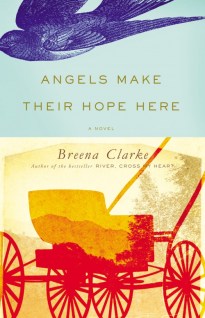
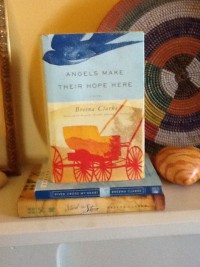
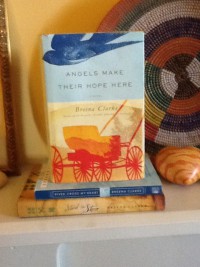
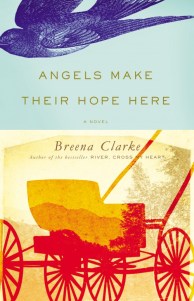
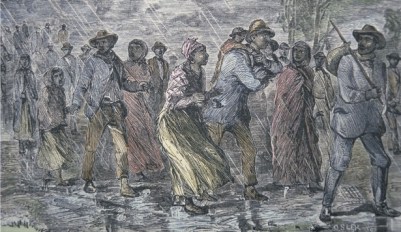
I was inspired to write ANGELS MAKE THEIR HOPE HERE by an interest in imagining the lives and community of people living outside the strictures imposed by racist white America. It’s set in mid-19th century New Jersey. Loosely based on the so-called Ramapo Mountain people, who were said to have been a tri-racial maroon community in the mid-Atlantic region, the people of Russell’s Knob privilege no color above another. And though they are insular, they welcome those who escape from oppression in the white towns. I enjoyed speculating on this somewhat utopian vision of racial amalgamation rather than separation. The novel has at its climax the horrible events of the New York City Draft Riots (July 13-16, 1863).

For more of this interview, go to https://writeanglesconference.com

For further discussion of ANGELS MAKE THIER HOPE HERE, listen to Breena Clarke’s podcast interview with Tim Knox for  Placing Literature


visit www.BreenaClarke.com

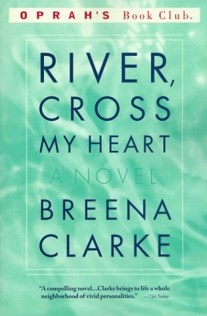
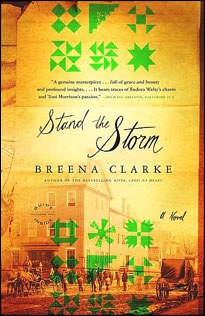
River, Cross My Heart   Stand The Storm      Clarke-AngelsMakeTheirHope


Spotlight: Breena Clarke

I’m celebrating the fifth consecutive year of The Hobart Festival of Women Writers. I’m presenting a workshop, reading my work and selling books. For more information: http://www.hobartfestivalofwomenwriters.com

Breena Clarke's avatarHobart Festival of Women Writers 2025

Hobart Festival of Women Writers announces a presenter change. Breena Clarke, novelist, teacher and Festival co-organizer will replace Sonya Huber. Ms. Huber is seriously ill and unable to attend Festival 2017.

_DSC5344         Breena Clarke is the author of three novels, most recently, Angels Make Their Hope Here, set in an imagined mixed-race community in 19th century New Jersey. Breena Clarke’s debut novel, River, Cross My Heart (1999) was an Oprah Book Club selection. Her critically reviewed second novel, Stand The Storm, set in mid-19th century Washington, D.C., was named one of the 100 best books for 2008 by The Washington Post. Her short stories have appeared in Kweli Journal and The Stonecoast Review among others. Breena Clarke is a member of the board of A Room Of Her Own Foundation; is a member of the fiction faculty of The Stonecoast MFA Creative Writing program at The University of…
View original post 305 more words

Maroon New Jersey

Tim Knox interviews Breena Clarke for the website, PLACING LITERATURE, about the setting of ANGELS MAKE THEIR HOPE HERE 

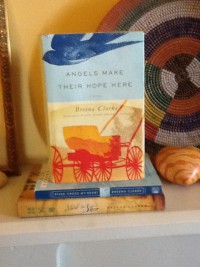
Clarke-AngelsMakeTheirHope

http://bit.ly/1oi1cLM

ANGELS MAKE THEIR HOPE HERE is set in an imagined community in a mountainous area roughly north and west of Paterson, New Jersey in the 19th century. Russell’s Knob is a hidden, secretive place settled by people who might be described today as bi-racial or tri-racial. The inhabitants describe themselves as runaways and stay-aways. They are people who reject the limiting definitions of racial identity and character of 19th century, mid-Atlantic, North America and live outside of the “white” towns. They are spoken of derisively as “amalgamators” and “race mixers” though their true history is as complex as is the history of settlement in the region.


for more information on about BreenaClarke’s books: www.BreenaClarke.com


“Whose baby child are you?”

A SPECIAL BLACK HISTORY MONTH RE-POST

Anne Rasmussen speaks with Breena Clarke for  LATE NIGHT LIBRARY 

Breena Professional Photo           Fugitives i color

http://latenightlibrary.org/breena-clarke/#wrap.

They’re discussing ANGELS MAKE THEIR HOPE HERE and its depictions of fathers, surrogate fathers, patriarchy vs. matrilineal constructs and parenting in the time of slavery.

Featured Image -- 1085

. . . the most damaging aspect of the institution of slavery is the destruction of familial relationships through separation and the inability of enslaved parents to protect their children. It is in the interest of preserving families that the people of Russell’s Knob built a community, preferring to live apart from the mainstream in order to stay together with loved ones.

Parenting in the time of slavery is necessarily fraught with peril. In Breena Clarke’s novel, ANGELS MAKE THEIR HOPE HERE, young Dossie’s parents do the most difficult thing imaginable. They send their child off to uncertainty rather than have her suffer as an enslaved person on the Kenworthy plantation. They embrace a hope that, with the help of others, she can become free and live a better life (even if they don’t actually know what that better life would be). For them, the knowable horror of Kenworthy plantation is worth risking this child’s life and separating from her forever.

for more information on Breena Clarke’s books: www.BreenaClarke.com

IMG_3709


Face Values

Why are people STLL in a tizzy about racial identity in the 21st century?  Is there anything else that Americans talk about and talk about and talk about? However, until now, the topic of white skin privilege was never put on the table. Passing judgment on the racial identity of others is a traditional American sport. A great many people imagine they can do an adequate job of doing the math on race. How much yellow, brown, red or black skin color does an individual have relative to the default white? And myriad other calculations help us decide on a person’s racial identity.

Alfred Clarke

Passing across racial boundaries is a longstanding theme in American fiction.

In the imagined 19th century town of Russell’s Knob, which is the setting for the novel, Angels Make Their Hope Here, race identification is fluid. In a town of amalgamators, race mixers – the complex national and racial identities of the inhabitants do not hinder their cohesiveness, community and camaraderie. But the maroons of Russell’s Knob hector white skin privilege in this small community because of their ancestors’ experiences of the First European Contact, the Middle Passage and chattel slavery in the Americas. In Russell’s Knob you are some combination of what your parents bring with them. You are, in appearance, a blend of the physical characteristics of all of your forebears. If being white-skinned confers no special privileges in this tri-racial town, forays into the wider, whiter world are fraught with danger.

“Maybe you could get in, Pet,” Jan said.

“What? Oh, shut up, Jan! You probably could, too.” Pet    said. “You got the price.”

“But not in the Alta Club. That’s a place for pale white-skinned men like you and your father,” August said to Pet, “only.” August looked straight into Pet’s face. He had the eyes all the Vanders have that people call molasses bullets because they’re the color that molasses becomes in the deep wintertime and they are hard like ice.

“What does it matter?” Pet asked. He felt the one glass of whiskey he’d drunk sear his stomach and roar to his head. He chose to be dumb to August’s provocation. But a realization crept up on him that his pale face had kept him from knowing some deep tenets that Jan knew – that August knew – because their faces said something different from his face in the town. And he didn’t know what they knew, or did he? 

 “I ain’t white,” Pet said.        

“Well, you look white,” Jan came back at him.

You and your papa.” Again August spoke in a sly voice of instigation. “You the only ones look white enough to pass through those doors.”

“I aint no white man,” Pet said as he’d said so many times before. 

“Pet, don’t be dumb about it. You know what you look like. You know what people take you for.”

from ANGELS MAKE THEIR HOPE HERE

Now available in paperback with Reading Group Guides including a Conversation with Breena Clarke http://bit.ly/1K09XEZ

BLACK HER-STORY MONTH, TOO

Nevertheless, she persisted. Maria Stewart, the first African American woman to lecture about women’s rights. Black Her-Story Month, too!

Breena Clarke's avatarbreenaclarkebooks

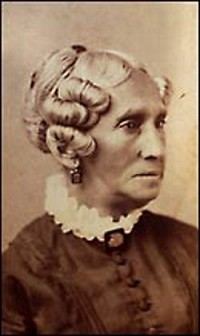
maria-stewart

NEVERTHELESS, SHE PERSISTED

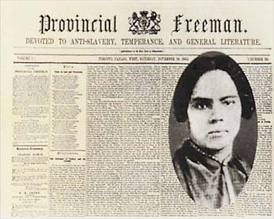
Maria (nee Miller )Stewart was the first woman to speak before a “promiscuous” audience, i.e. men and women, black and white in early 19th century America. She was the first African-American woman to lecture about women’s rights. Stewart focused particularly on the rights of black women, religion, and social justice among black people. She also became the first African-American woman to make public anti-slavery speeches and is one of the first African-American women to make public lectures for which there are still surviving copies.
Maria Stewart newspaper
 
“Most of our color have dragged out a miserable existence of servitude from the cradle to the grave. And what literary acquirements can be made, or useful knowledge derived, from either maps, books or charm, by those who continually drudge from Monday morning until Sunday noon? O, ye fairer sisters, whose hands are never soiled, whose nerves and muscles are never strained, go…

View original post 409 more words