


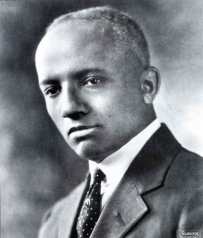
Alfred Clarke
Passing across racial boundaries is a longstanding theme in American fiction.
In the imagined 19th century town of Russell’s Knob, which is the setting for the novel, Angels Make Their Hope Here, race identification is fluid. In a town of amalgamators, race mixers – the complex national and racial identities of the inhabitants do not hinder their cohesiveness, community and camaraderie. But the maroons of Russell’s Knob hector white skin privilege in this small community because of their ancestors’ experiences of the First European Contact, the Middle Passage and chattel slavery in the Americas. In Russell’s Knob you are some combination of what your parents bring with them. You are, in appearance, a blend of the physical characteristics of all of your forebears. If being white-skinned confers no special privileges in this tri-racial town, forays into the wider, whiter world are fraught with danger.
“Maybe you could get in, Pet,” Jan said.
“What? Oh, shut up, Jan! You probably could, too.” Pet said. “You got the price.”
“But not in the Alta Club. That’s a place for pale white-skinned men like you and your father,” August said to Pet, “only.” August looked straight into Pet’s face. He had the eyes all the Vanders have that people call molasses bullets because they’re the color that molasses becomes in the deep wintertime and they are hard like ice.
“What does it matter?” Pet asked. He felt the one glass of whiskey he’d drunk sear his stomach and roar to his head. He chose to be dumb to August’s provocation. But a realization crept up on him that his pale face had kept him from knowing some deep tenets that Jan knew – that August knew – because their faces said something different from his face in the town. And he didn’t know what they knew, or did he?
“I ain’t white,” Pet said.
“Well, you look white,” Jan came back at him.
“You and your papa.” Again August spoke in a sly voice of instigation. “You the only ones look white enough to pass through those doors.”
“I aint no white man,” Pet said as he’d said so many times before.
“Pet, don’t be dumb about it. You know what you look like. You know what people take you for.”
from ANGELS MAKE THEIR HOPE HERE
Now available in paperback with Reading Group Guides including a Conversation with Breena Clarke http://bit.ly/1K09XEZ

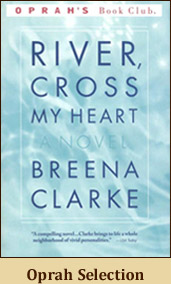 Eight-year-old Clara Bynum is dead, drowned in the Potomac River in the shadow of an apparently haunted rock outcropping known locally as the Three Sisters. In scenes alive with emotional truth, River, Cross My Heart weighs the effect of Clara’s absence on the people she has left behind: her parents, Alice and Willie Bynum, torn between the old world of their rural North Carolina home and the new world of the city, to which they have moved in search of a better life for themselves and their children; the friends and relatives of the Bynum family in the Georgetown neighborhood they now call home; and, most especially, Clara’s sister, twelve-year-old Johnnie Mae, who must come to terms with the powerful and confused emotions sparked by her sister’s death as she struggles to decide and discover the kind of woman she will become. Read an excerpt here:
 Even though Sewing Annie Coats and her son, Gabriel, have managed to buy their freedom, their lives are still marked by constant struggle and sacrifice. Washington’s Georgetown neighborhood, where the Coatses operate a tailor’s shop and laundry, is supposed to be a “promised land” for former slaves but is effectively a frontier town, gritty and dangerous, with no laws protecting black people.The remarkable emotional energy with which the Coatses wage their daily battles-as they negotiate with their former owner, as they assist escaped slaves en route to freedom, as they prepare for the encroaching war, and as they strive to love each other enough-is what propels Stand the Storm. Read an excerpt here:
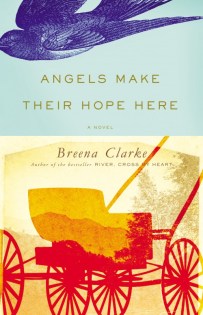
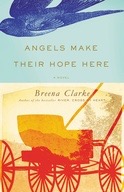
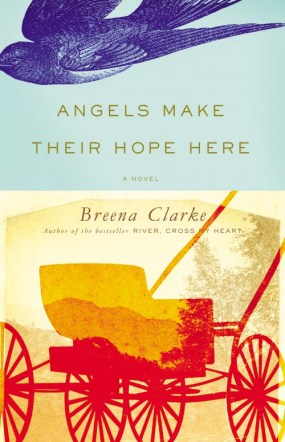
 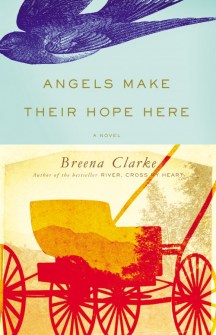 ANGELS MAKE THEIR HOPE HERE is set in an imagined community in a mountainous area roughly north and west of Paterson, New Jersey in the 19th century. Russell’s Knob is a hidden, secretive place settled by people who might be described today as bi-racial or tri-racial. The inhabitants describe themselves as runaways and stay-aways. They are people who reject the limiting definitions of racial identity and character of 19th century, mid-Atlantic, North America and live outside of the “white” towns. They are spoken of derisively as “amalgamators” and “race mixers” though their true history is as complex as is the history of settlement in the region. Read an excerpt here:


 breenaclarkebooks