An Interview with Breena Clarke

Featured Image -- 1313

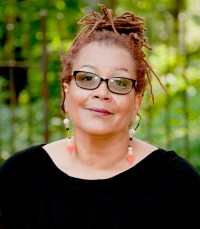
 Breena Clarke speaks to Write Angles, a one day writer’s conference in Eastern Massachusetts, November 18, 2017.

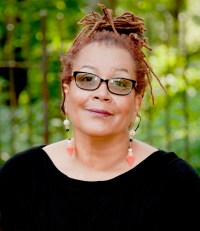
Breena Clarke is this year’s featured after-lunch speaker.  She was interviewed by Liz Bedell.

Why did you become a writer? When did the writing bug first bite you?

Firstly, No biting, especially not insects. I come naturally to writing I would say. I have always been inspired by books, since my very first trip to the public library. These buildings in my childhood in Washington, D.C. were pleasant places. I majored in theater, acting at Howard University and I wrote and directed and performed plays. So I’ve always felt like a writerly person. But the thing or series of events that made me into a committed, daily, working writer began with the early death of my son, Najeeb. Motivated to record all of his life that I could remember, I began keeping small notebooks capturing thoughts and observations. A friend said that writing is like a muscle. The more exercise it gets, the stronger it becomes. I suppose I exercised my writer’s imagination through these books that I still have and that have never actually served any purpose other than as personal writing. The important part is that I began a training regimen for my mind. I consumed the good books written by others and launched into my own inquiries. I set aside time for writing, for developing an idea.

What is the most rewarding part of being a writer?

Non seriously, but with humor at self: Reading what you’ve written a few days earlier that reads well and you think, “Hey, this girl is good, who is she?”

Seriously, but not wanting to sound self-satisfied: When someone comes up to you and tells you how moved they were when they read your work or heard you read. This is the moment of greatest satisfaction for me. It comes right before the “hey, who is this girl?” moment.

And the most frustrating part of being a writer?

I don’t know that yet. I haven’t gotten there yet. My mind is still sharp, and my energy is good, so I feel productive as a writer. Productivity relieves writerly frustration for me.

Can you tell us about your most recent novel? What inspired it?

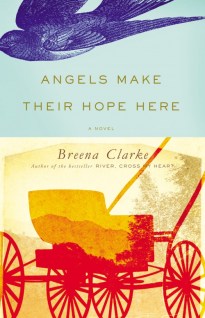
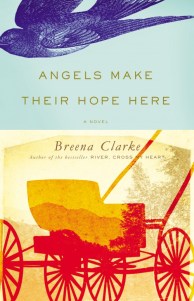
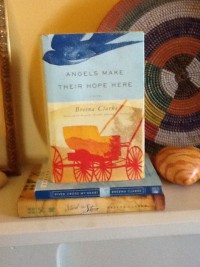
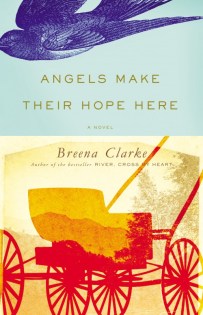
I was inspired to write ANGELS MAKE THEIR HOPE HERE by an interest in imagining the lives and community of people living outside the strictures imposed by racist white America. It’s set in mid-19th century New Jersey. Loosely based on the so-called Ramapo Mountain people, who were said to have been a tri-racial maroon community in the mid-Atlantic region, the people of Russell’s Knob privilege no color above another. And though they are insular, they welcome those who escape from oppression in the white towns. I enjoyed speculating on this somewhat utopian vision of racial amalgamation rather than separation. The novel has at its climax the horrible events of the New York City Draft Riots (July 13-16, 1863).

For more of this interview, go to https://writeanglesconference.com

For further discussion of ANGELS MAKE THIER HOPE HERE, listen to Breena Clarke’s podcast interview with Tim Knox for  Placing Literature


visit www.BreenaClarke.com
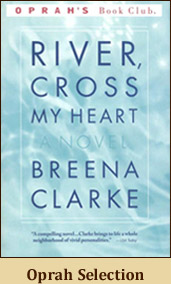
River, Cross My Heart   Stand The Storm      Clarke-AngelsMakeTheirHope


Maroon New Jersey

Tim Knox interviews Breena Clarke for the website, PLACING LITERATURE, about the setting of ANGELS MAKE THEIR HOPE HERE 

Clarke-AngelsMakeTheirHope

http://bit.ly/1oi1cLM

ANGELS MAKE THEIR HOPE HERE is set in an imagined community in a mountainous area roughly north and west of Paterson, New Jersey in the 19th century. Russell’s Knob is a hidden, secretive place settled by people who might be described today as bi-racial or tri-racial. The inhabitants describe themselves as runaways and stay-aways. They are people who reject the limiting definitions of racial identity and character of 19th century, mid-Atlantic, North America and live outside of the “white” towns. They are spoken of derisively as “amalgamators” and “race mixers” though their true history is as complex as is the history of settlement in the region.


for more information on about BreenaClarke’s books: www.BreenaClarke.com


“Whose baby child are you?”

A SPECIAL BLACK HISTORY MONTH RE-POST

Anne Rasmussen speaks with Breena Clarke for  LATE NIGHT LIBRARY 

Breena Professional Photo           Fugitives i color

http://latenightlibrary.org/breena-clarke/#wrap.

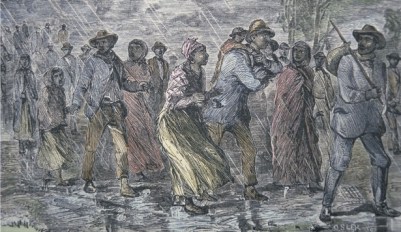
They’re discussing ANGELS MAKE THEIR HOPE HERE and its depictions of fathers, surrogate fathers, patriarchy vs. matrilineal constructs and parenting in the time of slavery.

Featured Image -- 1085

. . . the most damaging aspect of the institution of slavery is the destruction of familial relationships through separation and the inability of enslaved parents to protect their children. It is in the interest of preserving families that the people of Russell’s Knob built a community, preferring to live apart from the mainstream in order to stay together with loved ones.

Parenting in the time of slavery is necessarily fraught with peril. In Breena Clarke’s novel, ANGELS MAKE THEIR HOPE HERE, young Dossie’s parents do the most difficult thing imaginable. They send their child off to uncertainty rather than have her suffer as an enslaved person on the Kenworthy plantation. They embrace a hope that, with the help of others, she can become free and live a better life (even if they don’t actually know what that better life would be). For them, the knowable horror of Kenworthy plantation is worth risking this child’s life and separating from her forever.

for more information on Breena Clarke’s books: www.BreenaClarke.com

IMG_3709


Face Values

Why are people STLL in a tizzy about racial identity in the 21st century?  Is there anything else that Americans talk about and talk about and talk about? However, until now, the topic of white skin privilege was never put on the table. Passing judgment on the racial identity of others is a traditional American sport. A great many people imagine they can do an adequate job of doing the math on race. How much yellow, brown, red or black skin color does an individual have relative to the default white? And myriad other calculations help us decide on a person’s racial identity.

Alfred Clarke

Passing across racial boundaries is a longstanding theme in American fiction.

In the imagined 19th century town of Russell’s Knob, which is the setting for the novel, Angels Make Their Hope Here, race identification is fluid. In a town of amalgamators, race mixers – the complex national and racial identities of the inhabitants do not hinder their cohesiveness, community and camaraderie. But the maroons of Russell’s Knob hector white skin privilege in this small community because of their ancestors’ experiences of the First European Contact, the Middle Passage and chattel slavery in the Americas. In Russell’s Knob you are some combination of what your parents bring with them. You are, in appearance, a blend of the physical characteristics of all of your forebears. If being white-skinned confers no special privileges in this tri-racial town, forays into the wider, whiter world are fraught with danger.

“Maybe you could get in, Pet,” Jan said.

“What? Oh, shut up, Jan! You probably could, too.” Pet    said. “You got the price.”

“But not in the Alta Club. That’s a place for pale white-skinned men like you and your father,” August said to Pet, “only.” August looked straight into Pet’s face. He had the eyes all the Vanders have that people call molasses bullets because they’re the color that molasses becomes in the deep wintertime and they are hard like ice.

“What does it matter?” Pet asked. He felt the one glass of whiskey he’d drunk sear his stomach and roar to his head. He chose to be dumb to August’s provocation. But a realization crept up on him that his pale face had kept him from knowing some deep tenets that Jan knew – that August knew – because their faces said something different from his face in the town. And he didn’t know what they knew, or did he? 

 “I ain’t white,” Pet said.        

“Well, you look white,” Jan came back at him.

You and your papa.” Again August spoke in a sly voice of instigation. “You the only ones look white enough to pass through those doors.”

“I aint no white man,” Pet said as he’d said so many times before. 

“Pet, don’t be dumb about it. You know what you look like. You know what people take you for.”

from ANGELS MAKE THEIR HOPE HERE

Now available in paperback with Reading Group Guides including a Conversation with Breena Clarke http://bit.ly/1K09XEZ

Why? It’s Her Story

Breena Clarke talks a

Breena Professional PhotoThe impetus for beginning to write River, Cross My Heart came directly as a result of having listened to an oral history that my mother had taped at my request. She and my father grew up in the Georgetown section of Washington, D.C and their memories of the neighborhood were vivid. It was more than facts that they related. They related a sense of community that enforced social segregation made imperative, but that nevertheless was a source of their positive sense of themselves. I regretted that the stories of Washington’s neighborhoods were not known, were not being told. Why not, I wondered? It gave me a lot of energy to galvanize my research work as being necessary, being purposeful.
read the interview:

http://bit.ly/28XBEDv       IMG_0598

see the complete list of historical novels by women recommended for Black History Month 2017 by Herstory Novels : http://herstorynovels.com/read-african-american-history-month/

for more information about Breena Clarke’s books:  www.BreenaClarke.com

Ah, beauty is a complex play of familiarity and surprise!

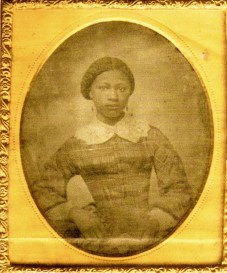
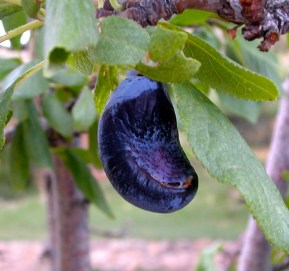
Dossie Smoot           hanging-plum_1

She’s a pretty little dark plum. Had he trespassed? He had asked her. Ha! She wanted him, she had said, and seemed to. He knew damned well he had a sway with her. Hell, he’d counted on that. Little Bird was so obedient to him now that he was afraid of himself. What was a man supposed to do when a lucky coin cross his path? He will close his hand around it. He will praise his good fortune. But still in all, this ain’t the same as trifling with a grown woman, Duncan argued with himself.

from Angels Make Their Hope Here by Breena Clarke

Read an excerpt:  http://bit.ly/1NZsFus

for more information on Breena Clarke’s books, visit: www.BreenaClarke.com

Clarke-AngelsMakeTheirHope


Reading for February

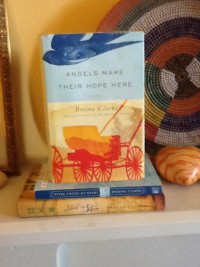
Reader on the shelf

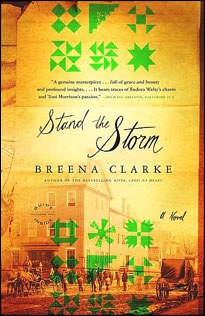
Stand The Storm, Breena Clarke’s searing historical novel, set in 19th century Washington, D.C. is available in a special

African-American historical fiction promotion from

Hachette Book Group.

 STAND THE STORM special promotion

Even though Sewing Annie Coats and her son, Gabriel, have managed to buy their freedom, their lives are still marked by constant struggle and sacrifice. Washington’s Georgetown neighborhood, where the Coatses operate a tailor’s shop and laundry, is supposed to be a “promised land” for former slaves but is effectively a frontier town, gritty and dangerous, with no laws protecting black people.

This is a novel about identity, about the power of talent and about freedom and constriction in life. Clarke writes in a deceptively simple and subtle style, with an almost perfect sense of period and history. Clearly, there were many people like the Coats family — determined to be free to carve their own piece of the American dream. We all know stories of the great black exceptions, but Breena Clarke writes about ordinary people who happen to be exceptional.”

— Gail Buckley, The Washingon Post Book World

Listen as Breena Clarke reads a searing excerpt of  STAND THE STORM


The complete, unabridged audiobook version of STAND THE STORM is available on Audible.com at Stand The Storm audiobook

img_05991

Written By: Breena Clarke

Narrated By: Richard Allen

Publisher: Tantor Media

Date: October 2008

Duration: 10 hours 28 minutes


for more information about Breena Clarke’s books, go to www.BreenaClarke.com 


Since when is new?

“New York! New Amsterdam! Act! Grandmother spit when she say it. She say ‘since when is new?’ Grandmother’s spittle runs into our creeks. It sustains us. We won’t die of thirst in these hills.Our Grandmother sleeps there up ahead. She is taking her well-earned nap. Her lips fall back. Spittle runs our of the side of her mouth while she sleeps. The hills, the outcropping, the ridges, these are her misshapen teeth. Them sharp juts are what remain when flesh pulls back from bone.”  from ANGELS MAKE THEIR HOPE HERE

Angels Make Their Hope Here     Dossie Smoot

Since when is new, I ask. I write historical fiction primarily from an urge to re-tell the past, rehabilitate the skimpy, fractured, fragmented narratives of the people of The Americas, the so-called New World. I believe that much of the national narrative of The United States is based on limited facts, racially motivated lies and the visceral belief that all people are NOT created equally. .Sometimes it feels like I have a score to settle. I think I must be a caretaker of imagination so that our race of people are not unimagined and thus disappear from the earth. I feel I need to be  like Scheherazade. I survive daily because I’m able to continue to tell stories of myself/OURSELVES. 

                                 Breena Clarke

read an excerpt of ANGELS MAKE THEIR HOPE HERE  http://bit.ly/2kUtZZ4

visit Breena’s website: www.BreenaClarke.com

IMG_3709

Breena Clarke’s books


The Beautiful Necessaries: Quilts in 19th Century African American life.

IMG_0599

“Control of the finished product becomes a metaphor for self-emancipation.”                                                                                                                                             Breena  Clarke

Through the lens of her brilliantly engaging novel, STAND THE STORM, Breena Clarke talks about textiles, quilting and enslavement.

View one of Harriet Powers’ stunning quilts:

http://www.mfa.org/collections/object/pictorial-quilt-116166

more about Harriet Powers – https://en.wikipedia.org/wiki/Harriet_Powers

Discussing the African American experience in 19th Century Washington, D.C. Breena Clarke shares insights about the characters of STAND THE STORM.

https://youtu.be/Jxz-w8wrFPo

Read an excerpt of STAND THE STORMhttp://bit.ly/2kNABZR

for more information about the novels of Breena Clarke, visit: www.BreenaClarke.com

IMG_3709

Breena Clarke’s books


February (Feb-roo-airy) has 28 Days

carter-woodson

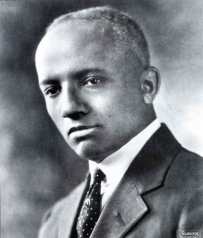
Dr. Carter G. Woodson

February is the month designated to honor and celebrate the achievements and culture of African Americans in the United States. Dr. Carter G. Woodson (1875-1950), www.blackpast.org/aah/woodson-carter an African American historian, author, journalist and the founder of the Association for the Study of African American Life and History. launched the celebration of “Negro History Week” in February 1926; it was the precursor of Black History Month.

Breena Professional Photo

Novelist, Breena Clarke celebrates the history of African peoples in the Americas in three critically acclaimed novels. Add these to your “GotToRead” list for February 2017.

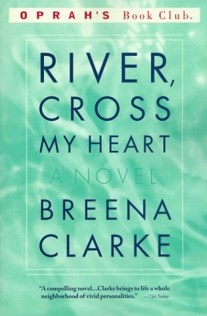
IMG_0598    Eight-year-old Clara Bynum is dead, drowned in the Potomac River in the shadow of an apparently haunted rock outcropping known locally as the Three Sisters. In scenes alive with emotional truth, River, Cross My Heart weighs the effect of Clara’s absence on the people she has left behind: her parents, Alice and Willie Bynum, torn between the old world of their rural North Carolina home and the new world of the city, to which they have moved in search of a better life for themselves and their children; the friends and relatives of the Bynum family in the Georgetown neighborhood they now call home; and, most especially, Clara’s sister, twelve-year-old Johnnie Mae, who must come to terms with the powerful and confused emotions sparked by her sister’s death as she struggles to decide and discover the kind of woman she will become. Read an excerpt here:  http://bit.ly/2kP20hF
IMG_0599   Even though Sewing Annie Coats and her son, Gabriel, have managed to buy their freedom, their lives are still marked by constant struggle and sacrifice. Washington’s Georgetown neighborhood, where the Coatses operate a tailor’s shop and laundry, is supposed to be a “promised land” for former slaves but is effectively a frontier town, gritty and dangerous, with no laws protecting black people.The remarkable emotional energy with which the Coatses wage their daily battles-as they negotiate with their former owner, as they assist escaped slaves en route to freedom, as they prepare for the encroaching war, and as they strive to love each other enough-is what propels Stand the Storm. Read an excerpt here: http://bit.ly/2kNABZR

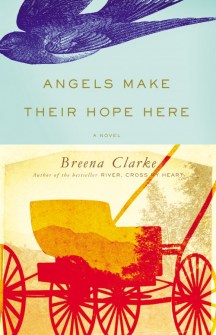
Clarke-AngelsMakeTheirHope   ANGELS MAKE THEIR HOPE HERE is set in an imagined community in a mountainous area roughly north and west of Paterson, New Jersey in the 19th century. Russell’s Knob is a hidden, secretive place settled by people who might be described today as bi-racial or tri-racial. The inhabitants describe themselves as runaways and stay-aways. They are people who reject the limiting definitions of racial identity and character of 19th century, mid-Atlantic, North America and live outside of the “white” towns. They are spoken of derisively as “amalgamators” and “race mixers” though their true history is as complex as is the history of settlement in the region. Read an excerpt here: http://bit.ly/1NZsFus

Visit Breena’s website at: www.BreenaClarke.com

https://www.facebook.com/angelsmaketheirhopehere on Facebook

Breena_Clarke onTwitter