Our Trespasses


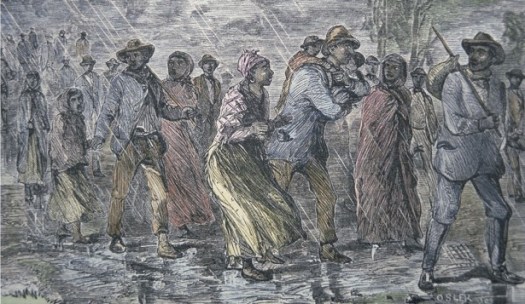
StewartMaria_132Prior to the great personal watershed of 1849 when he rescued my mother, then a child, Duncan Smoot was known on the underground circuit as The Moses of Octoraro Creek. Because of his exploits, he was well respected amongst those who knew and emulated the brave ones who worked to free people from slavery. However, in the course of rescuing Mother, he did something that curtailed his effectiveness as a conductor and troubled him for some time after.

from The Moses of Octoraro Creek by Breena Clarke, published in issue #5 STONECOAST REVIEW,  http://www.stonecoastreview.org a literary arts journal published biannually by students and alumni from the Stonecoast MFA in Creative Writing (University of Southern Maine). Breena Clarke is a member of the fiction faculty at Stonecoast. for more about the Stonecoast MFA in Creative Writing: http://www.stonecoastreview.org/our-staff/

read the story: http://bit.ly/28KVhj9


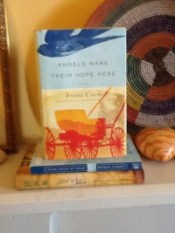
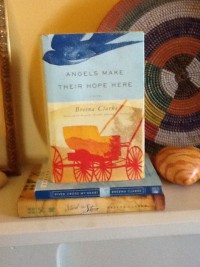
IMG_3709  Breena Clarke’s books are available in all formats.

Support your local bookstore, find it on Indiebound and order these titles today  www.indiebound.orgwww.indiebound.org

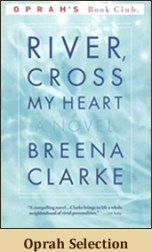
River, Cross My Heart

Stand The Storm

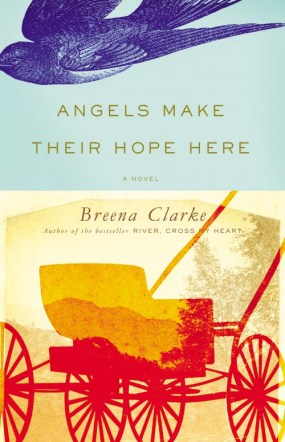
Angels Make Their Hope Here

for more information about Breena Clarke’s books: www.BreenaClarke.com


Our Father’s Days


She called him John Cleary. She was a sweet gal and she risked her life for me and the boy was mine. He was a cute little bastard.

Enter the mind of the bounty hunter, James Cleary. Read Breena Clarke’s riveting account,   “The People Catcher: Mr. Woolfolk’s Bounty” online at KWELI Journal, Truth From The Diaspora’s Boldest Voices        http://bit.ly/1ZcWlvG

Fugitives i color

for more information about Breena Clarke’s work: www.BreenaClarke.com

Catch The Wave

IMG_1594

A Room Of Her Own Foundation has put out the call for submissions to its first ever Waves Anthology. I’m thrilled to be a board member of the organisation and happy to help make this announcement. AROHO, committed to ending the isolation of creative women,  is looking for new & established voices, published & unpublished work for this soon to be landmark anthology. ALL WOMEN are invited to submit creative work of all kinds, including work from the 2015 AROHO Retreat Waves Discussion Series, and even portions of previously submitted Gift of Freedom applications.  Full information is found here: http://aroomofherownfoundation.org.  Be a part of the groundswell! Catch The Wave!

In this video Diane Gilliam and I discuss the project’s parameters and guidelines:

WAVES anthology video –  I was really excited to interview Diane about this opportunity for the AROHO community. The Deadline for submissions is August 1st.

Breena & Legacy scarf

in my AROHO Legacy scarf.

Also The Hurston-Wright Foundation’s Summer Workshops at Howard University are coming up August 6-12, 2016.  Deadline for application is May 14th. They are offering:

Creative Nonfiction: W. Ralph Eubanks, leader
This workshop explores the challenges of memoir, biography and nonfiction narratives.
&
The Art of Fiction: Elizabeth Nunez, leader 
This workshop for writers of short stories and long fictional narratives focuses on the essentials of skillful storytelling.
Founded in 1990, Hurston/Wright Foundation is a nonprofit committed to developing, mentoring, and honoring Black. Learn more at hurstonwright.org.

http://www.hurstonwright.org/programs/

And mark your calendar for the fourth annual Hobart Book Village Festival of Women Writers. September 9, 10th & 11th, 2016. This annual event held on the weekend after Labor Day  will bring together twenty-one published women writers to read from their work and offer workshops in the beautiful town of Hobart, New York, called The Book Village of the Catskills and the reading capital of New York State. Join my sister and me for a weekend dedicated to readers, writers and all lovers of language.

LOGO 2016

HBV Festival of Women Writers’ Participating Writers 2016

Here’s my Goodreads List of the work of our Festival of Women Writers Sisterhood:

HBV Festival of Women Writers on Goodreads

By My Precise Haircut

Be certain to get your copy of Cheryl Clarke’s eagerly awaited new collection of poetry, “By My Precise Haircut”. It’s available:

By My Precise Haircut by Cheryl Clarke at Small Press Distribution

Conference in Collar City

The Underground Railroad Public History Conference in Troy, N.Y

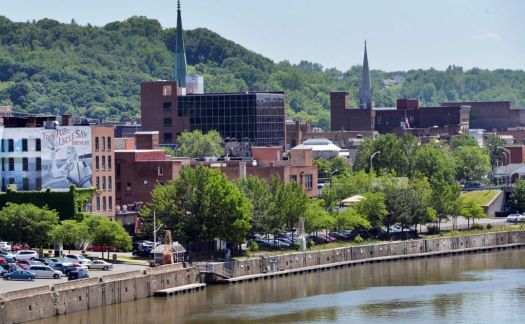
Troy, NY

Troy, New York is known as the “Collar City” due to its history in shirt collar production. https://en.wikipedia.org/wiki/Troy,_New_York , Troy was home to an innovator in men’s clothing, Hannah Lord Montague.  In 1825 Hannah, a local resident cut off the collars of her husband’s shirts, bound the edges and attached strings to hold them in place. This allowed the collars and cuffs to be washed and starched separately and revolutionized the manufacturing and laundering of men’s shirts. Montague’s idea changed the fashion for American men’s shirts for a century. The industry grew and was significant in the development of women worker’s rights.

Hugging the Hudson River, next door to Albany, Troy, NY once again hosted the Underground Railroad Public History conference held at Russell Sage College. Last weekend’s (april15 – 17th) three-day program is organized by Paul and Mary Liz Stewart and 2016 marks their 15th annual conference. The couple’s stated aim is “. . . to continue to plumb the depths of this inspiring work for justice engaged in by those who participated in The Underground Railroad Movement.” http://undergroundrailroadhistory.org  Once again, a lively mix of academics, local historians and scholars of the subject came together for a weekend of talks, books on the subject, tours to historical sites (http://bit.ly/1SmGBSu , a keynote speech by the distinguished professor of History and Africana studies at Colgate University, Graham Russell Gao Hodges. He’s the author of, “David Ruggles: A Black Abolitionist and the Underground Railroad in New York City.” http://unc.live/23LDDBQ.

IMG_1522

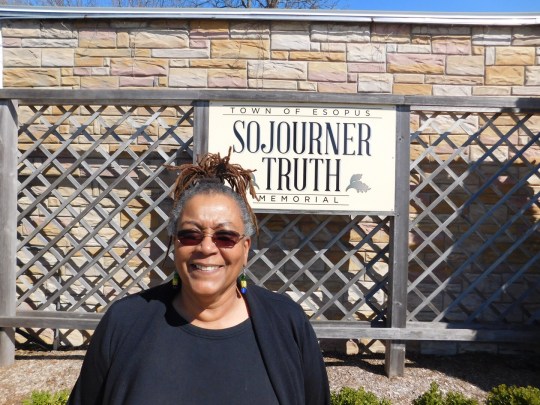
Many thanks to Dr. Paula L. Poulin for pointing out the commemorative memorial for Sojourner Truth in The Town of Esopus, NY. We stopped off to see it on the leisurely ramble southbound on route 9W to reach home.


13th National Black Writers Conference

Books, Banter, Badinage, Brooklyn: talking about the Literature of the African Diaspora
Breena Professional Photo

I’m pleased and honored to be participating in the 

13th NATIONAL BLACK WRITERS CONFERENCE

WRITING RACE, EMBRACING DIFFERENCE

Thursday, March 31 – Sunday, April 3, 2016

on the campus of Medgar Evers College in Brooklyn. NY

presented by The Center for Black Literature

The mission of the Center for Black Literature is to expand, broaden, and enrich the public’s knowledge and aesthetic appreciation of the value of Black literature. This upcoming national conference will do just that. There are four full days of events featuring writers discussing their work, their lives and the issues that are relevant to contemporary life and the African peoples’ presence. 

Former Poet Laureate, Rita Dove is Honorary Chair of the conference and Edwidge Danticat, Woodie King Jr., Michael Eric Dyson & Charles Johnson are 2016 NBWC HONOREES

I’ll be part of a panel with Coe Booth, D. Watkins and Michael Datcher discussing: Shaping Memories: The Odyssey to Adulthood, Sunday, April 3rd 3:00p – 4:15pm. 

We’ll be discussing our work and the themes and moral values that inform the often fraught journey from youth to adulthood for young people of African descent in the Americas. 

 To register and to see the complete schedule, link here:

http://bit.ly/1ofhWGQ

http://bit.ly/1LS1jwb  – link here for a complete list of writers participating in the 13th National Black Writers Conference.

Sisterhood on the Road

JournalingOne image of the novelist or poet is as a solitary figure trussed up in angst and identity and typing feverishly through the night. Most of a novel is written in a writer’s own inspirational cave though, a place with comforts and demons and solitude. But solitude can turn into isolation and isolation is antithetical to the ultimate outcome of writing a novel: readers, audiences, followers. The antidote to isolation is community.
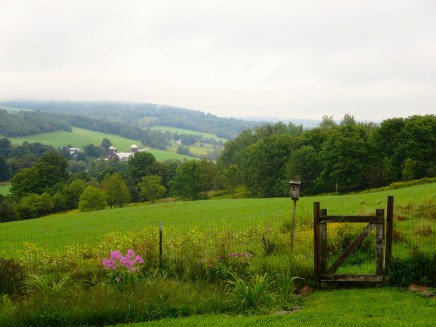
Catskills landscape

In the fall of 2012, My sister, Cheryl and I began to plan a Festival for Women Writers in a one-of-a-kind village in the western Catskills, Hobart, NY, The Reading Capital of New York State and an authentic Book Village. The Hobart Book Village Festival of Women Writers debuted in Fall 2013. One of the nicest aspects of our Festival’s creation is that we didn’t bring community to Hobart. It already had camaraderie and enthusiasm about books and the arts and six independent book stores. We’ve brought women from the tri-state (NY, NJ & CT) area and across the country  with published work in poetry, fiction and non-fiction in all genres to read, offer workshops and sell their books on the weekend following Labor Day.  Along the way through three successful annual Festivals and in planning our fourth, we’ve made connections with a dazzling group of women who write.

LOGO 2016

Link here for a complete list of the outstanding women who will be Participating Writers for Festival of Women Writers 2016

http://bit.ly/1RJK3bn

Breena and Cheryl Clarke

Breena and Cheryl Clarke, co-organizers of HBV Festival of Women Writers

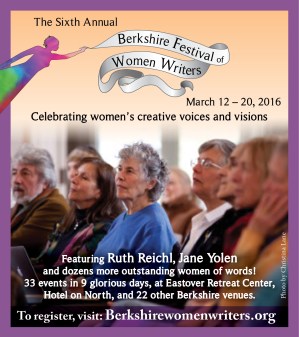
 I happy to say that I’ll be attending the Berkshire Festival of Women Writers 2016 for the first time this March. The Berkshire Festival is in its sixth year and like, Hobart Book Village Festival of Women Writers, offers a beautiful highland locale and enthusiastic engagement with the written word.
BFWW-2016-01-09

At the Berkshire Festival of Women Writers, we’re always looking to expand our mission of nourishing the voices and visions of women of all ages and from many walks of life. Why is this important? Because the world needs the creative energy and vision of women now more than ever, and creative women need community to be fully activated and confident in their own work.

Berkshire Festival of Women Writers 2016

On March 12, 2016, 1:30p – 3:30p – I will join Cheryl Clarke, Mary Johnson and Esther Cohen for a panel discussion, An Unquenchable Thirst For Writing.

Cheryl Clarke, http://www.cherylclarkepoet.com/about/the author of four books of poetry, the critical study, After Mecca: Women Poets and the Black Arts Movement (2005), and her collected works The Days of Good Looks: Prose and Poetry 1980-2005 (2006). After a distinguished career at Rutgers University, she co-founded The Hobart Book Village Festival of Women Writers and is author of the upcoming collection, By My Precise Haircut. 

Mary Johnson www.maryjohnson.co will read from her memoir, An Unquenchable Thirst, named one of 2011’s best by Kirkus Review and winner of the New Hampshire Literary Award for nonfiction. One of the founders of A Room Of Her Own Foundation, Mary served for more than a decade as Creative Director of Retreats for AROHO.

Esther Cohen, http://esthercohen.com/ the author of Don’t Mind Me: And Other Jewish Lies with illustrations by Roz Chast; the novels No Charge for Looking and Book Doctor; and two volumes of poetry,God Is a Tree and prayerbook, began Unseen America, an ongoing project in which homecare workers, migrants, nannies, and others among the working class tell their life stories through the photographs they take in their daily lives. She will read from her new collection of poems, I’m Getting Older.

And . . . Breena Clarke  www.BreenaClarke.com will read from her novel, Angels Make Their Hope Here, the story of a young girl’s harrowing journey to free herself and the complex, charismatic man who conducts her to Russell’s Knob, a haven for runaways in 19th century New Jersey.

We’re going to be discussing the Sisterhood of Writing and how we built and continue to build our writing communities through organizing Festivals and Retreats and creative opportunities for women writers.  We four have had varied careers and write in a variety of genres and styles. There are a lot of gates into the city of writing and we’ve each come through differently.

Why do we need Festivals for Women Writers? Writers are writers, right? And the best of them, whatever gender, will be well-read and successful, right? Sadly, no. Women are underrepresented in Literary magazines, book publishing and prizes. Check out:  VIDA COUNT Monthly update

Each year The VIDA Count compiles over 1000 data points from the top tier, or “Tier 1” journals, publications, and press outlets by which the literary community defines and rewards its most valued arts workers, the “feeders” for grants, teaching positions, residencies, fellowships, further publication, and ultimately, propagation of artists’ work within the literary community. about VIDA COUNT

Also at The Berkshire Festival of Women Writers on Saturday, March 12 @10am – 12pm will be the electrifying Esther Cohen and Good Stories: The Deep Red Heart Of Life  a workshop for story lovers and story makers who want to make their own stories better.

Writing festivals and retreats offer enrichment opportunities that may have been, in the past, inaccessible for a lot of women who write and who aspire to be published writers. The workshop experience can be especially valuable if you didn’t come through an MFA program or you’ve spent twenty years behind a desk. These annual and bi-annual Festivals are organized geographically, but they’re supported and nurtured by social media and that gives them global possibilities.


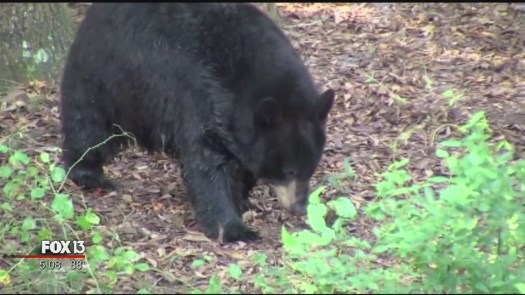
Hunting season is extended in New Jersey

Seasons Greetings, Bears of New Jersey: Hunting Season is extended.

Requiem for Ursus Americanus, The American Black Bear

Bear_hunt_begins_Saturday_despite_protes_0_398008_ver1.0

Ursus Americanus

Bear Hunt 2015 extended in NJ

“Your winter gal don’t cook much. You look thin,” she said. “Aw, Pippy,” Duncan answered. “You look like you been drinkin’ hard and sleepin’ in a bear’s cave. What kind of whore don’t take better care of you,” Hat continued saucily. Duncan would not dare be ill tempered in the circumstances. “Aw, hush, little hen, stop cluckin’ at me. You look plump and pretty. What you been doin’ all winter?” “Makin’ soap,” Hat snapped. “And is a damn good thing. Your clothes stink!” She pushed his dirty things along the ground with her foot and laughed merrily. Duncan laughed, too. Hattie’s gentle fussing was a winter pleasure sorely missed.

from Angels Make Their Hope Here (p. 62). Little, Brown and Company.Clarke-AngelsMakeTheirHope

“You must pledge it or we will leave Russell’s Knob,” Dossie declared and captured his eyes levelly. “Dossie is no rabbit now, Duncan Smoot. She is Mother Bear and she will be her cub’s champion.” She started to chuckle with herself. She remembered! Was it a fancy tale or a prophecy? At their winter work, Hat had poked fun at her brother’s mysterious time away, saying that he slept with she-bears in wintertime all because long, long ago Duncan had gone into a bear den in dead of winter when it was so cold they could barely catch their breath in the biting wind. Duncan, against advice, had taken a torch into the bear den. They all knew Mother Bear was inside, had taken her children and gone to sleep. He came out a day later sayin’ that he’d slept with the bear and her cubs and that they’d hardly noticed him and it was very, very warm and smelled very, very pleasant. “Everybody knows Duncan is the bear’s fancy,” Hat would finish and giggle uncontrollably.

from  Angels Make Their Hope Here (p. 274). Little, Brown and Company.

Read more of Angels Make Their Hope Here by Breena Clarke at:

http://bit.ly/1NZsFus

Order in any format for the holidays. Visit my website www.BreenaClarke.com

for links to purchase my books, River, Cross My Heart, Stand The Storm, and Angels Make Their Hope Here, published by Little, Brown & Co.

Seasons greetings 2012

A gift of literature is three times a charm because it enriches the giver, the recipient and the creative artist who produced it.

Don’t forget to give a gift in celebration of the principles of Kwanza  Kwanza

December 26, 2015 to January 1, 2016


When She Climbed From The Pool

 Since they opened the public swimming pool for white folks only on Volta Place, right across the street from her Aunt Ina’s house, the pleasures of Higgins Hole were diminished for Johnnie Mae. In that public pool the water was so clear! Clara said it must be ice water. Clara said they must get big blocks of ice from the ice man on Potomac Street and put them in there. She was certain of this because the white boys and girls they saw through the fence and bushes surrounding the pool were always shivering.        from RIVER, CROSS MY HEART

img_05981

In the 1990’s my mother tape-recorded her oral recollections of having grown up in Georgetown in the 1920’s, 30’s and forties. When she retold incidents related to the segregated swimming pool on Volta Place, her voice changed dramatically. Much of her story was like all the anecdotes she and my father told and retold on our summer rides through this mostly affluent part of town. Georgetown in the 1960’s was where Kennedy-era politicos built townhouses and bought up the historic mansions that had always been located there. Because of the Old Georgetown Act of 1950, most of the African American community had been forced out in the early 50’s. My father’s family owned one of the houses on “P” street that became the last block of African American residents in Georgetown.

JAMES S. %22POPSI%22 CLARAKE - 04

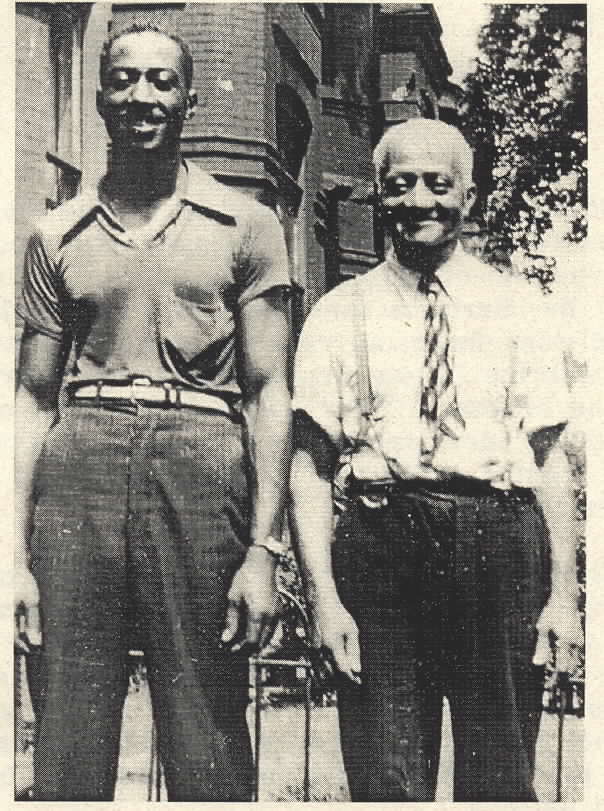
James Sheridan Clarke, Jr., my father, and James Sheridan Clarke, Sr., his father in front of 2721 “P” St. N.W. Georgetown,  Washington, D.C.

My parents’ recollections  of Georgetown were vivid and complex. They told fairly frank stories about the segregation they lived with, but had as well many stories of community, camaraderie and achievement.

When my mother spoke on the tape about the pool on Volta Place her voice changed so distinctly that I had a visceral response. I think my head snapped to attention. I’m sure I listened to her again and again. It was not the particulars of the tale. I’d heard all of the stories many times. I knew she’d been a fierce, bold, athletic swimming girl. But I’d never before heard the great change in her voice. Her voice had not been light and airy – that wouldn’t ever have been my mother’s voice — but it was relaxed and carefree. I recognized that she was softening and brightening her narration for my benefit. She was taking this project seriously so she was trying to give me helpful, positive information. When she began to talk about her feelings of wanting to swim in the whites only pool that was across the street from her aunt’s house, but that barred any colored/Negro/Black /African American people I felt arrested, compelled, riveted. My mother was not always self-revelatory. She was sometimes a secret- keeper and a grudge-holder. The change was in the timbre of her voice – a change that was not shrill or more vehement, but changed. A bell rang – sort of. It signaled that she was expressing certain childhood feelings, but I was to know that she no longer felt this small, raw way. I thought she did very much still feel those angers and that she was justified and I knew then that I’d write the novel that became RIVER, CROSS MY HEART just for this reason. I could make a novel of it because this was a story I could lift and carry for a while.

“How come we can’t go in that pool and swim?” Johnny Mae had repeatedly asked Aunt Ina since the beginning of summer.

“You don’t need to be over there anyway,” Aunt Ina had answered time and again.

from RIVER, CROSS MY HEART

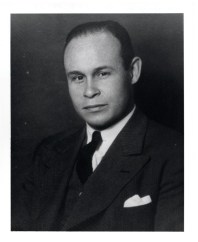
My mother became an outstanding swimmer. She had her first lessons at Francis Junior High School’s pool. She no doubt already had the rudiments of swimming because she told me they really did dip into the C&O Canal for swimming. A young medical student who would later become Dr. Charles R. Drew (https://en.wikipedia.org/wiki/Charles_R._Drew), the renowned African American physician, taught her formally at Francis pool. My mother called him Charlie Drew and always mentioned his handsomeness and his brother’s and spoke of his generosity in teaching all of Georgetown’s African American children to swim. A large part of my parents’ Georgetown narrative reflects a staunch optimism and wry humor with examples of uplift, misfortune, haplessness, foolishness, bravery, compassion and meanness added. They were all good stories.

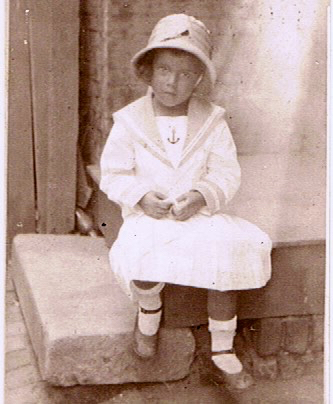
The only childhood photo we have of Edna Higgins is this very young one. Her swimming exploits mostly took place after this was taken and before adulthood.

Little Edna Edna Higgins in Georgetown circa 1920.

portrait_of_charles_drew

Dr. Charles R. Drew

By the time I accompanied my parents on automobile rides through the old Georgetown neighborhood, the carriage houses and servant’s quarters of the rich and famous had become the luxury townhouses of the nouveau. My parents liked to point out places where they’d lived and played, their favorite landmarks. Despite legal desegregation, Black children still weren’t swimming in the pool on Volta Place.

On the tape, despite all efforts to thwart it, my mother’s young girl self showed up to talk about her feelings. All of those years later she’d remembered and was articulate and analytical. She still recalled that deep sense of thwarted opportunity. I can no longer remember her words. I have the cassette tape and some written answers to specific queries I made. (She gave me the 411 on menstruation in her era in a frank, specific, helpful and surprising way.) I don’t think I used any of her actual words when I created the character Johnnie Mae Bynum in RIVER, CROSS MY HEART, but my mother gave me a model of access. She helped me to formulate my key – my trigger — to an emotional voice that takes on the timbre of true/deep.

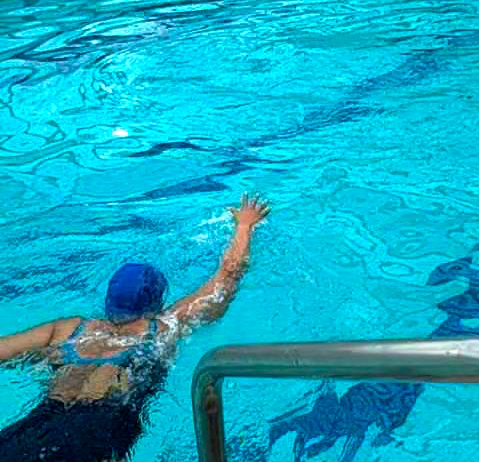
Blue Breena   Breena Clarke in Pershing Field Pool, Jersey City, N.J.

“River, Cross My Heart” is available in all formats. Link here to purchase: http://bit.ly/BuyBreenaClarkeBooks

My most recent novel, “Angels Make Their Hope Here,” is available in paperback with Reading Group Guides on July 14th.  Link here: http://bit.ly/1S8f8Wb for my “Angels” blog. To purchase a copy, link here: http://bit.ly/BuyBreenaClarkeBooks

BLACK HER-STORY MONTH, TOO

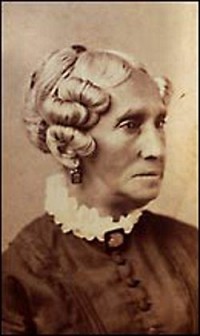
maria-stewart

NEVERTHELESS, SHE PERSISTED

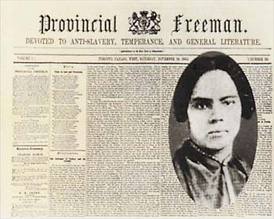
Maria (nee Miller )Stewart was the first woman to speak before a “promiscuous” audience, i.e. men and women, black and white in early 19th century America. She was the first African-American woman to lecture about women’s rights. Stewart focused particularly on the rights of black women, religion, and social justice among black people. She also became the first African-American woman to make public anti-slavery speeches and is one of the first African-American women to make public lectures for which there are still surviving copies.
Maria Stewart newspaper
 
“Most of our color have dragged out a miserable existence of servitude from the cradle to the grave. And what literary acquirements can be made, or useful knowledge derived, from either maps, books or charm, by those who continually drudge from Monday morning until Sunday noon? O, ye fairer sisters, whose hands are never soiled, whose nerves and muscles are never strained, go learn by experience! Had we had the opportunity that you have had, to improve our moral and mental faculties, what would have hindered our intellects from being as bright, and our manners from being as dignified as yours?… And why are not our forms as delicate, and our constitutions as slender, as yours? Is not the workmanship as curious and complete? Have pity upon us, have pity upon us, O ye who have hearts to feel for other’s woes; for the hand of God has touched us. Owing to the disadvantages under which we labor, there are many flowers among us that are…born to bloom unseen.
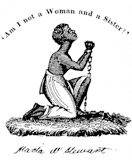
StewartMaria_132
Stewart’s address in 1832 at Boston’s Franklin Hall, is notable in that Stewart used it to support a vision of black nationalism. Framed as a “black jeremiad”, Stewart’s speech followed in the tradition of the jeremiad as a rhetorical device in American discourse and refers to the prophet Jeremiah, author of the book of Lamentations.  It is a melancholy disputation and it embodies warnings of further judgment and greater sufferings to come. Maria Stewart’s “black jeremiad” then was a means by which a black American woman warned whites of “the judgment that was to come for the sin of slavery.”
 
For more background on Maria Stewart’s 1832 speech: http://archive.vod.umd.edu/civil/stewart1832int.htm
Link here for pix and info about Maria Stewart and six other women whose feminism was necessarily radicalized by the simple act of standing up and speaking out as Black women. http://bit.ly/1zRHA7O
Read a book of Maria Stewart’s speeches

Maria W. Stewart, America's first Black woman political writer : essays and speeches

I’m old enough to have remembered the events as portrayed in Ava Duverney’s film, “Selma.” Everything about the film seemed pitch perfect to me though I realized while watching that the lesson, for me, was that we Americans do not see things in the same ways. I can’t actually explain why this continues to surprise me. I remember the excitement of MLK’s speeches. I remember his words as  always reasonable, charitable, intelligent.  When I recall  that people didn’t agree, that some people still don’t, I still shake my head  in disbelief.

Kudos to Ms. Duverney for her beautiful film. Like so many Black women artists before her, she has made a way from no way.

Civil Rights marchers Selma to Montgomery

Civil Rights marchers on Edmund Pettus Bridge

For Your FEBRUARY enrichment read: 
ANGELS MAKE THEIR HOPE HERE
STAND THE STORM
RIVER, CROSS MY HEART
IMG_3709
for more information about Breena Clarke’s books: www.BreenaClarke.com