

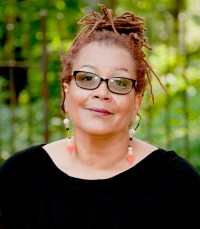
Breena Clarke speaks to Write Angles, a one day writer’s conference in Eastern Massachusetts, November 18, 2017.
 Breena Clarke is this year’s featured after-lunch speaker. She was interviewed by Liz Bedell.

Why did you become a writer? When did the writing bug first bite you?
Firstly, No biting, especially not insects. I come naturally to writing I would say. I have always been inspired by books, since my very first trip to the public library. These buildings in my childhood in Washington, D.C. were pleasant places. I majored in theater, acting at Howard University and I wrote and directed and performed plays. So I’ve always felt like a writerly person. But the thing or series of events that made me into a committed, daily, working writer began with the early death of my son, Najeeb. Motivated to record all of his life that I could remember, I began keeping small notebooks capturing thoughts and observations. A friend said that writing is like a muscle. The more exercise it gets, the stronger it becomes. I suppose I exercised my writer’s imagination through these books that I still have and that have never actually served any purpose other than as personal writing. The important part is that I began a training regimen for my mind. I consumed the good books written by others and launched into my own inquiries. I set aside time for writing, for developing an idea.
What is the most rewarding part of being a writer?
Non seriously, but with humor at self: Reading what you’ve written a few days earlier that reads well and you think, “Hey, this girl is good, who is she?”
Seriously, but not wanting to sound self-satisfied: When someone comes up to you and tells you how moved they were when they read your work or heard you read. This is the moment of greatest satisfaction for me. It comes right before the “hey, who is this girl?” moment.
And the most frustrating part of being a writer?
I don’t know that yet. I haven’t gotten there yet. My mind is still sharp, and my energy is good, so I feel productive as a writer. Productivity relieves writerly frustration for me.
Can you tell us about your most recent novel? What inspired it?
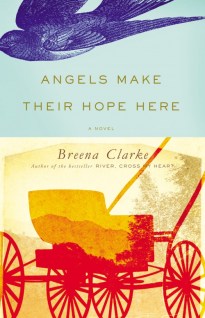
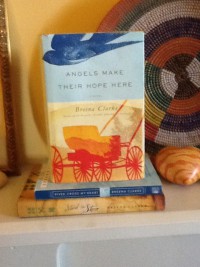
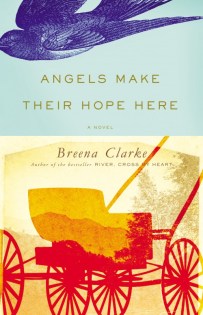
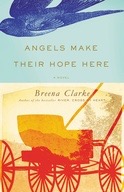
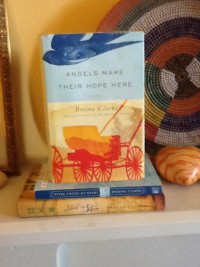
I was inspired to write ANGELS MAKE THEIR HOPE HERE by an interest in imagining the lives and community of people living outside the strictures imposed by racist white America. It’s set in mid-19th century New Jersey. Loosely based on the so-called Ramapo Mountain people, who were said to have been a tri-racial maroon community in the mid-Atlantic region, the people of Russell’s Knob privilege no color above another. And though they are insular, they welcome those who escape from oppression in the white towns. I enjoyed speculating on this somewhat utopian vision of racial amalgamation rather than separation. The novel has at its climax the horrible events of the New York City Draft Riots (July 13-16, 1863).
For more of this interview, go to https://writeanglesconference.com
For further discussion of ANGELS MAKE THIER HOPE HERE, listen to Breena Clarke’s podcast interview with Tim Knox for Placing Literature
visit www.BreenaClarke.com
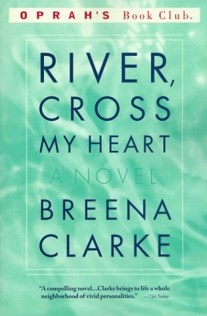






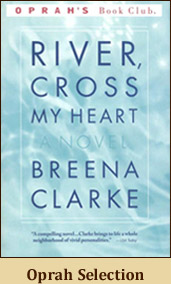 Eight-year-old Clara Bynum is dead, drowned in the Potomac River in the shadow of an apparently haunted rock outcropping known locally as the Three Sisters. In scenes alive with emotional truth, River, Cross My Heart weighs the effect of Clara’s absence on the people she has left behind: her parents, Alice and Willie Bynum, torn between the old world of their rural North Carolina home and the new world of the city, to which they have moved in search of a better life for themselves and their children; the friends and relatives of the Bynum family in the Georgetown neighborhood they now call home; and, most especially, Clara’s sister, twelve-year-old Johnnie Mae, who must come to terms with the powerful and confused emotions sparked by her sister’s death as she struggles to decide and discover the kind of woman she will become. Read an excerpt here:
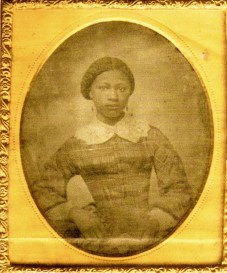
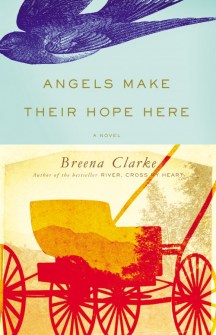 ANGELS MAKE THEIR HOPE HERE is set in an imagined community in a mountainous area roughly north and west of Paterson, New Jersey in the 19th century. Russell’s Knob is a hidden, secretive place settled by people who might be described today as bi-racial or tri-racial. The inhabitants describe themselves as runaways and stay-aways. They are people who reject the limiting definitions of racial identity and character of 19th century, mid-Atlantic, North America and live outside of the “white” towns. They are spoken of derisively as “amalgamators” and “race mixers” though their true history is as complex as is the history of settlement in the region. Read an excerpt here:
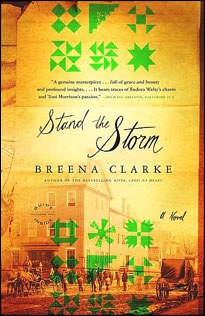
 Prior to the great personal watershed of 1849 when he rescued my mother, then a child, Duncan Smoot was known on the underground circuit as The Moses of Octoraro Creek. Because of his exploits, he was well respected amongst those who knew and emulated the brave ones who worked to free people from slavery. However, in the course of rescuing Mother, he did something that curtailed his effectiveness as a conductor and troubled him for some time after.
 Breena Clarke’s books are available in all formats.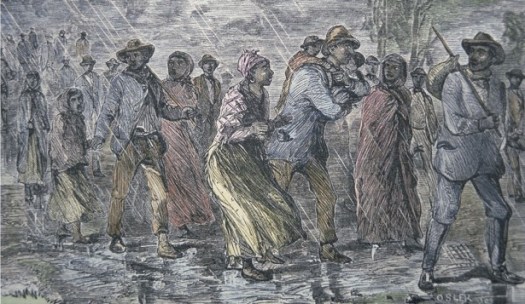


 breenaclarkebooks